


There are a lot of hazards that people don’t realize women fall in if they keep on wearing men’s products.
— Monica Mortimer, Operations Manager, Fashion by F.A.S.T.
Imagine a world where your clothes aren’t made for you and never were. Where your safety is an afterthought. Where you, along with 50% of the population, go into dangerous situations in ill-fitting equipment. Women who work in the trades don’t have to imagine it.
“I worked for [a hiking apparel company] for seven years,” Marie Kaul-Rahiman, Product Designer at Fashion by F.A.S.T. tells us. “When I started there, they had men’s sizing and unisex sizing. And kids and youth. No women’s. Their unisex sizing was one size down from men’s. They used a men’s small and called it the unisex medium. No other changes made to it.”
This was in the 90s, she says.
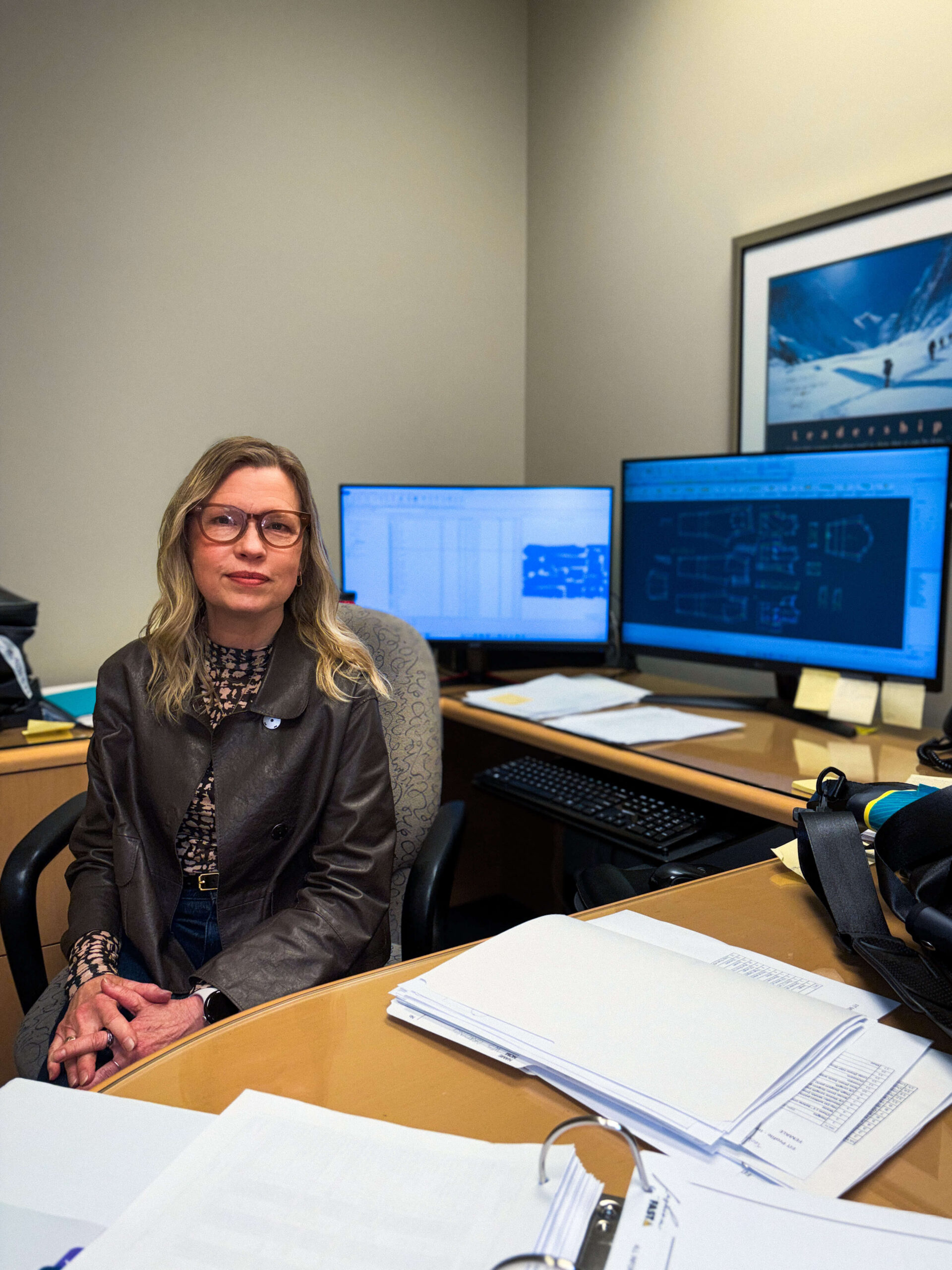
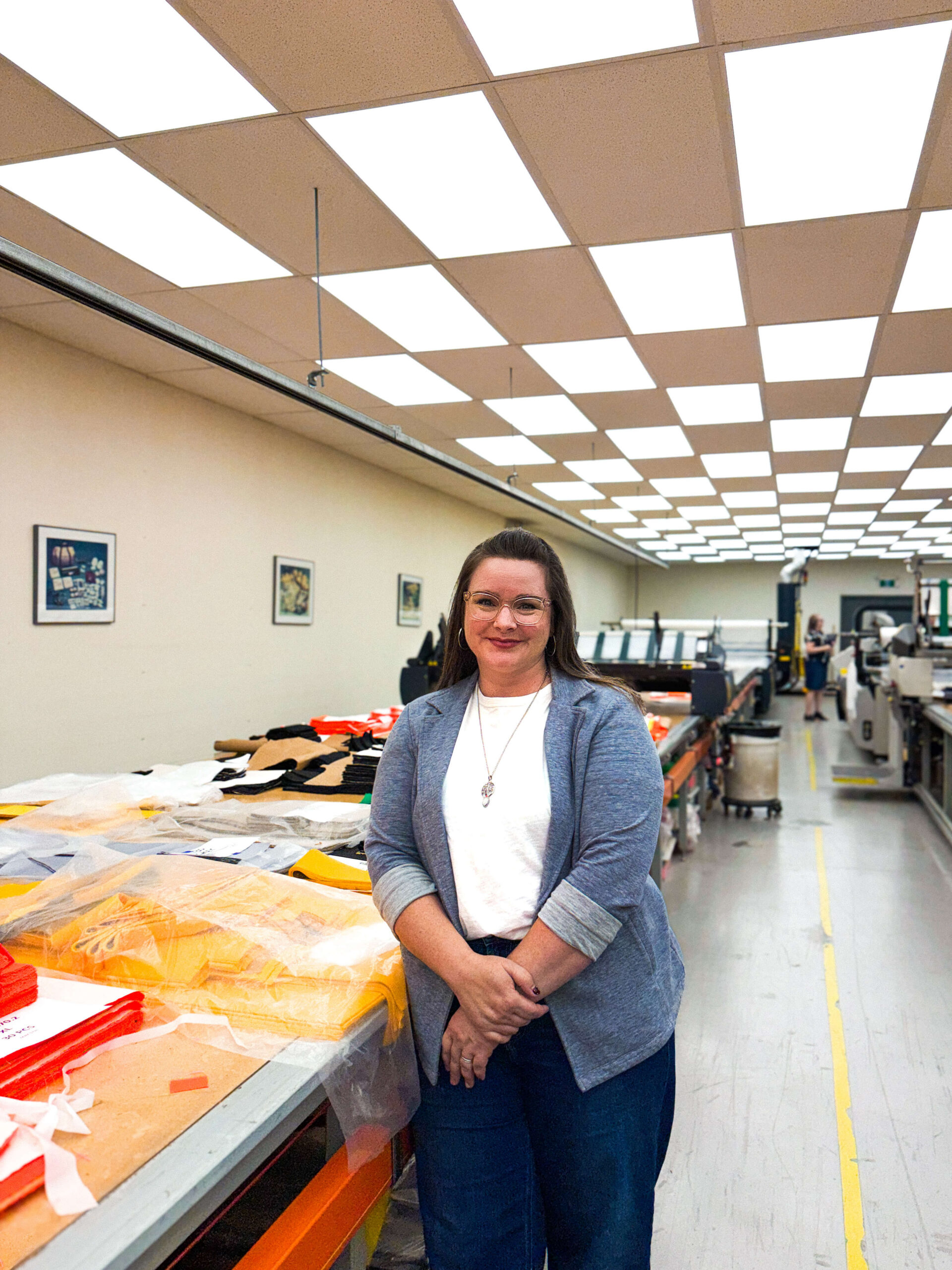
Marie sits at her desk
Today, progress has been made in athletic clothing. What about in the job force?
Mainroad Group learned about Fashion by F.A.S.T. in late 2025. A personal protective equipment brand based out of Delta, BC, Fashion by F.A.S.T. provides women with properly designed, well-fitting high-visibility safety clothing.
Just in time for International Women’s Day 2026, Mainroad reached out to F.A.S.T. about creating a partnership between the two companies and holding a contest where two women from Mainroad (one in electrical, and one in highway maintenance) could win a new set of personal protective equipment (PPE). F.A.S.T. jumped on board, and the train got rolling.
When one of the winners, Faith from Cobra Electric, ended up being from the Lower Mainland, an extra layer was added to her prize: a tour of F.A.S.T.’s facility in Delta and a full fitting for her electrical gear.
When we arrive, an all-female brigade welcomes us in. Each woman carries specialized knowledge in different fields, and together, their expertise joins forces towards their shared goal. Their building is full of windows and bright with natural light. Included on the property are their offices, sewing rooms, a kitchen and water distillery for their survival packs (they bake the food and distill the water in-house), and lots of other corners we didn’t get to see.
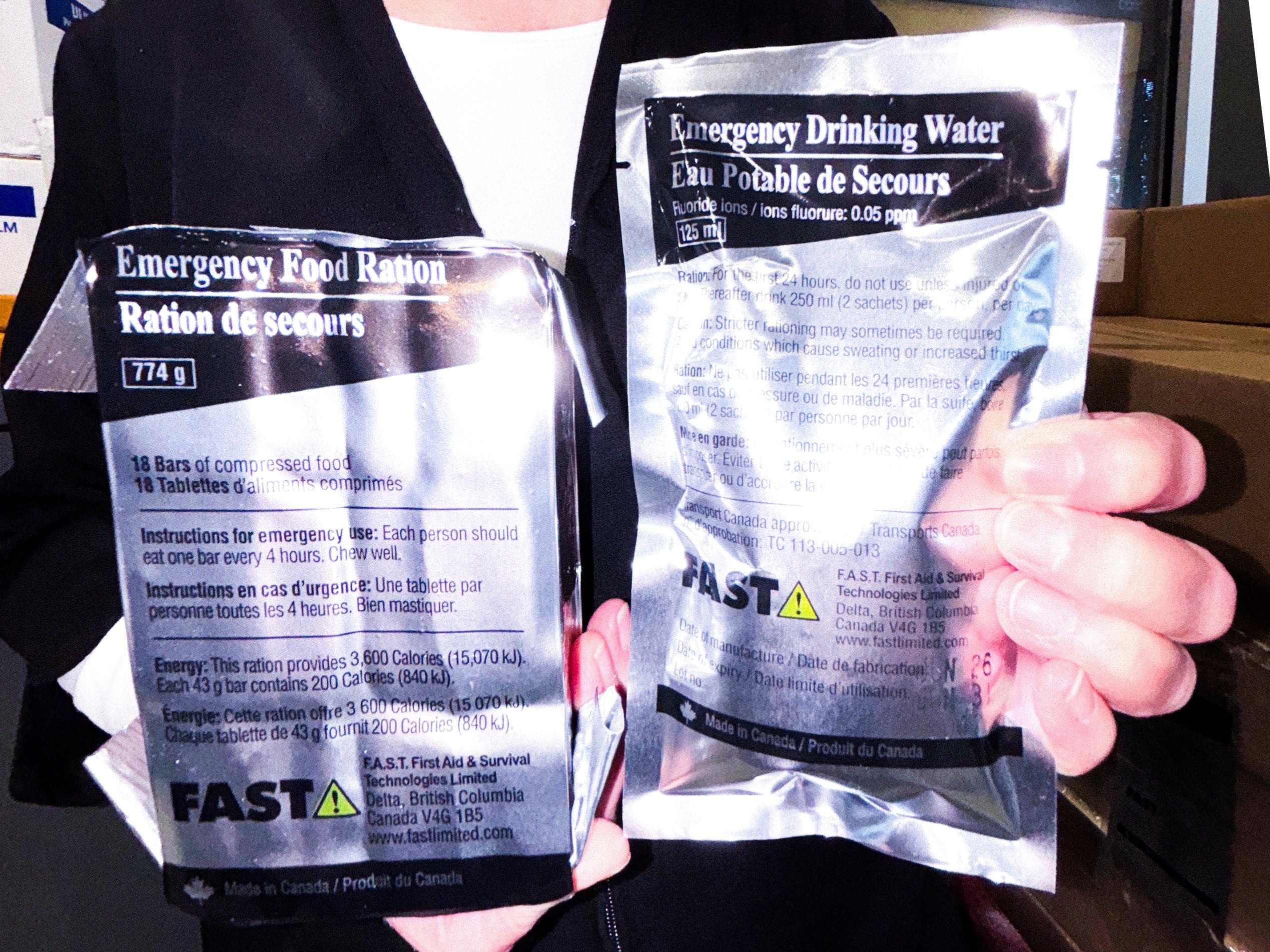
Emergency food and water rations produced by F.A.S.T.
Being a local company, everything is dreamed-up, designed, and produced in Delta. Each garment is given the care and attention necessary for the utmost safety.
“Most of our fabric is Canadian,” Monica Mortimer, Operations Manager, tells us as we view shelf upon shelf of fabric upon fabric. “Canadian manufacturers make it and adhere to Canada’s regulations of no chemicals, no this, no that, so that they don’t have what’s happening overseas.”
“No manual labour, no robots,” laughs Stephanie Smythe, Customer Experience Specialist.
“There are no PFSAs—” says Lindsay Norris, Product Designer, “— no forever chemicals. Which is huge for women’s health.”
“So when we say Canadian Made, we try to make it as Canadian-made as possible,” Stephanie says.
Even with operating in Canada, as “advanced” as we are, manufacturers who produce women’s safety apparel are few and far between. It can’t be that there aren’t any women in the trades— there are. It shouldn’t be that we don’t have the resources to make it— we do. So why do we accept that women are less safe out in the workforce?
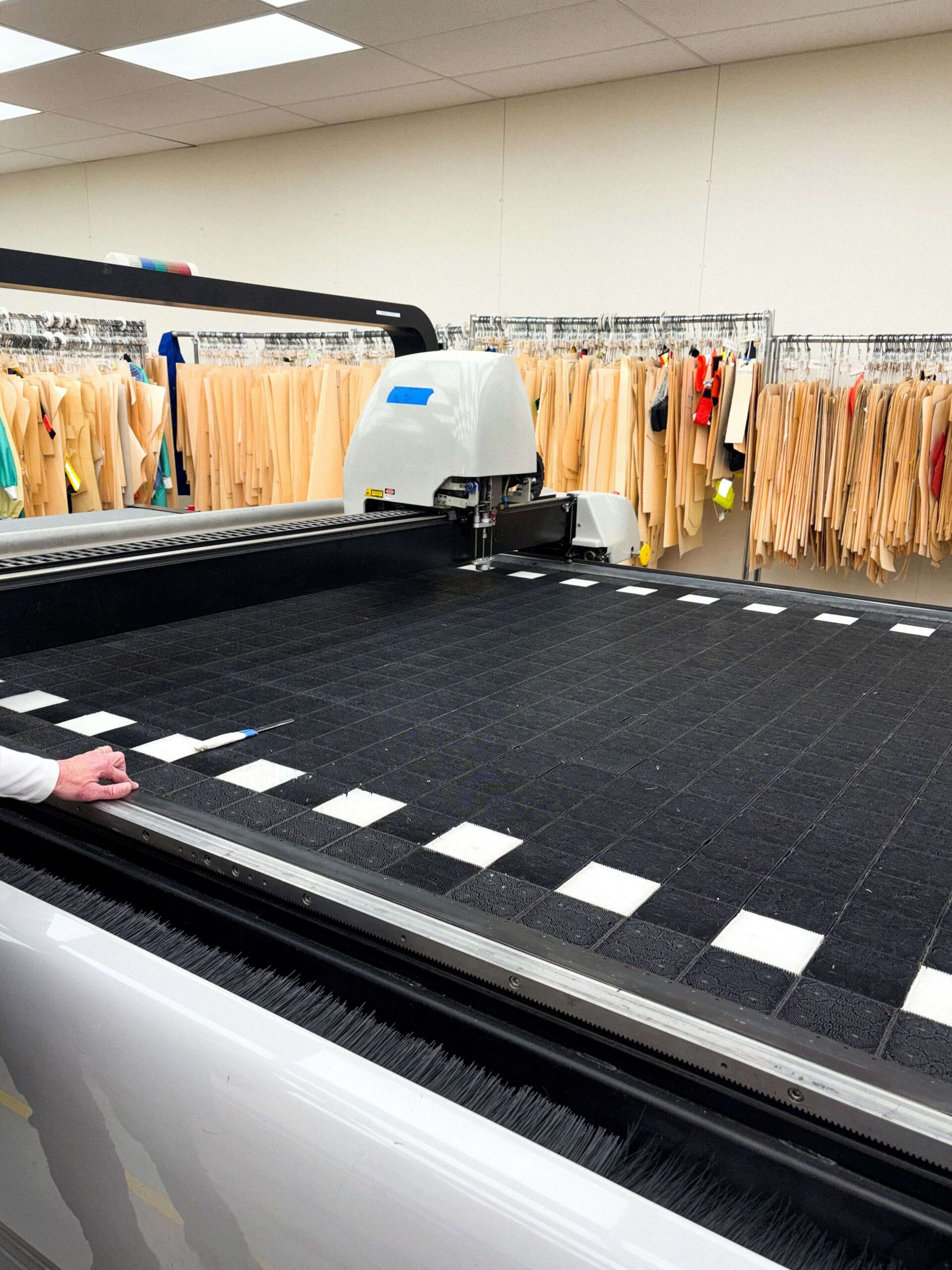
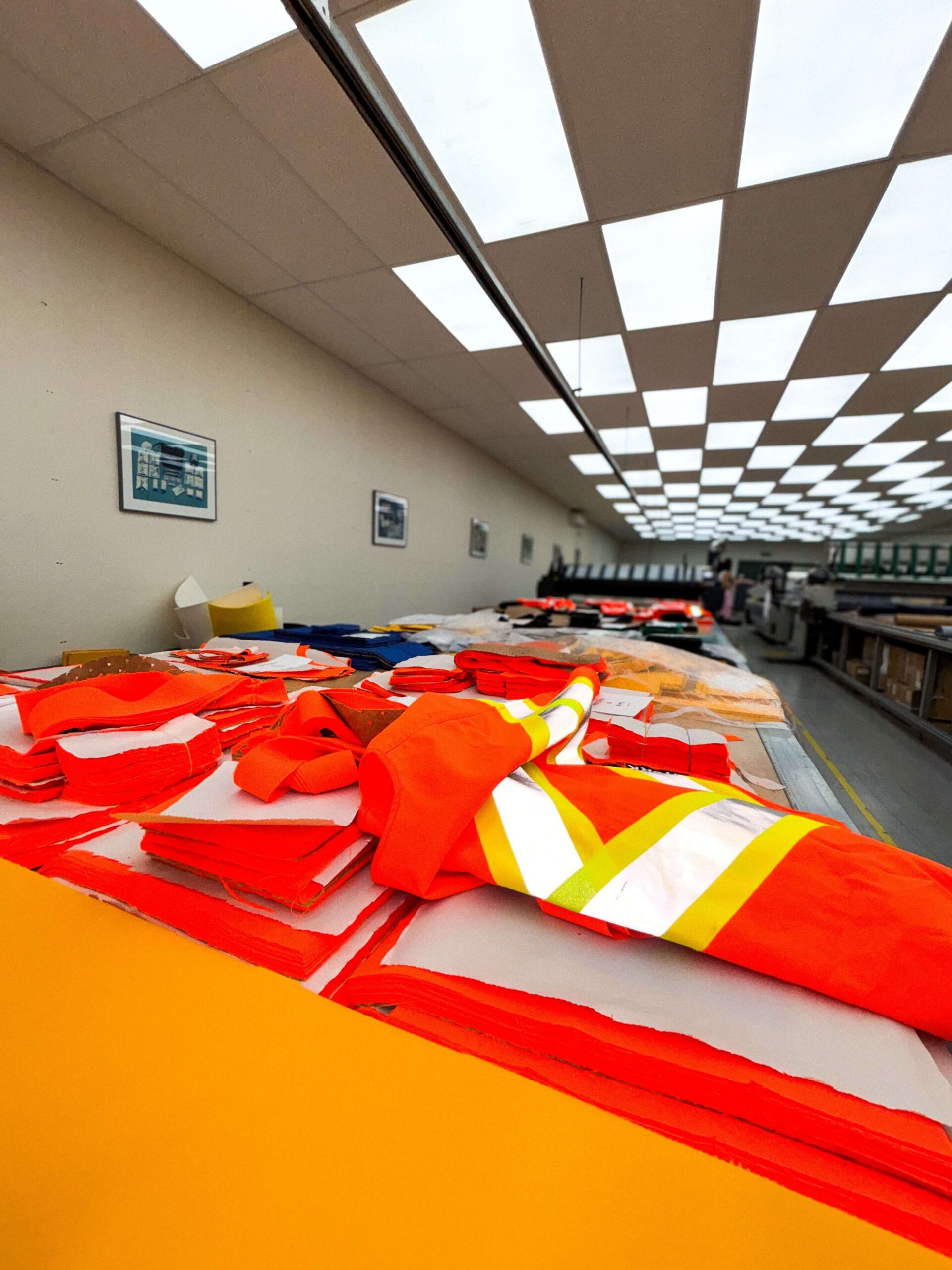
One of F.A.S.T.'s fabric cutting machines
The whole purpose of making women’s clothing was because what the woman is wearing out there in the workforce right now is, say, a men’s extra small coverall. The hazard that comes with it when you’re not fitted properly is that it easily can get caught on machinery. It’s hanging over, you’re dragging it on the ground. You could get caught up in a grate— and you’re not going nowhere. Now what are you going to do? Cut it off? Maybe you’ve got no scissors.
There are a lot of hazards that are involved in just not wearing the proper vest or coveralls. There are a lot of hazards that people don’t realize women fall in if they keep on wearing men’s products.
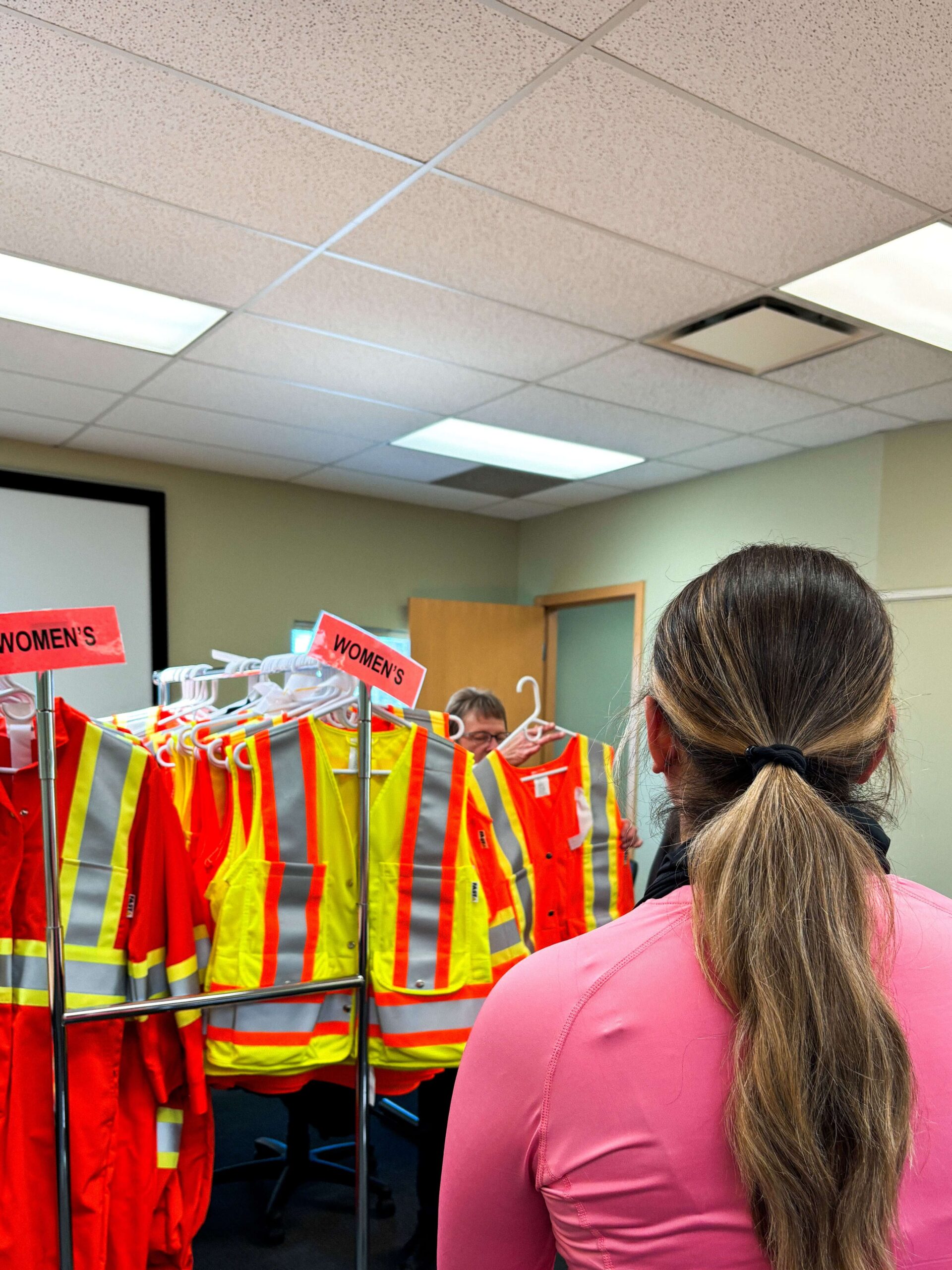
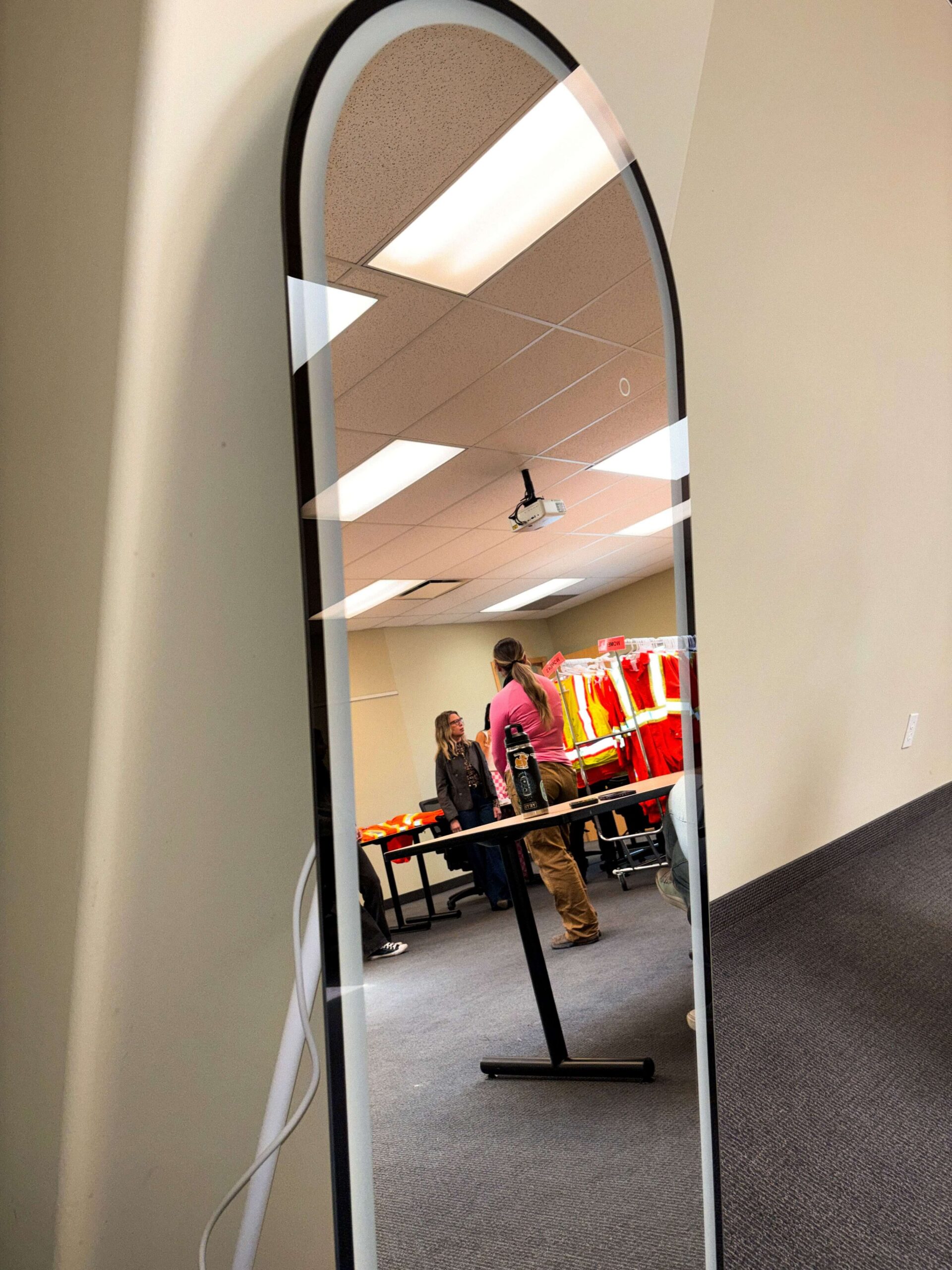
Racks labelled "Women"
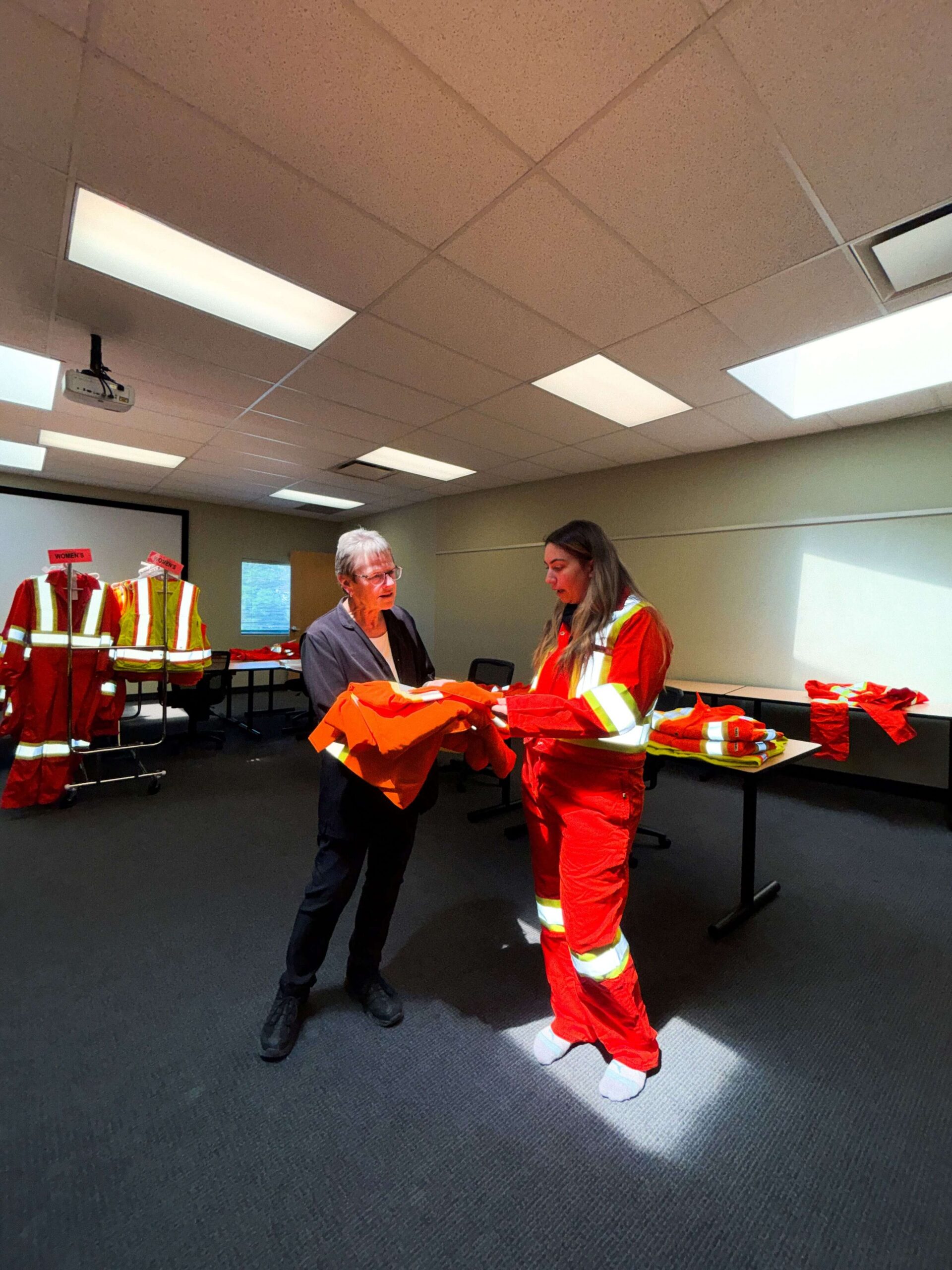
When we enter the boardroom, the F.A.S.T. team blooms. Two racks labelled “women” greet us in fluorescent orange, and tangerine light flecks across the walls. The team is in their element. You can tell that the fruition gets to them when a live model visits. They get busy offering Faith, our contest winner, different sizes and styles of PPE.
Marie glides over to some vests laid out on a table. She describes the materials, the fit. The recipe that went into such a specified design. “It’s mesh, breathable. If you’re going to be going out into the field, you might need a harness…” she explains, holding it out for us to see.
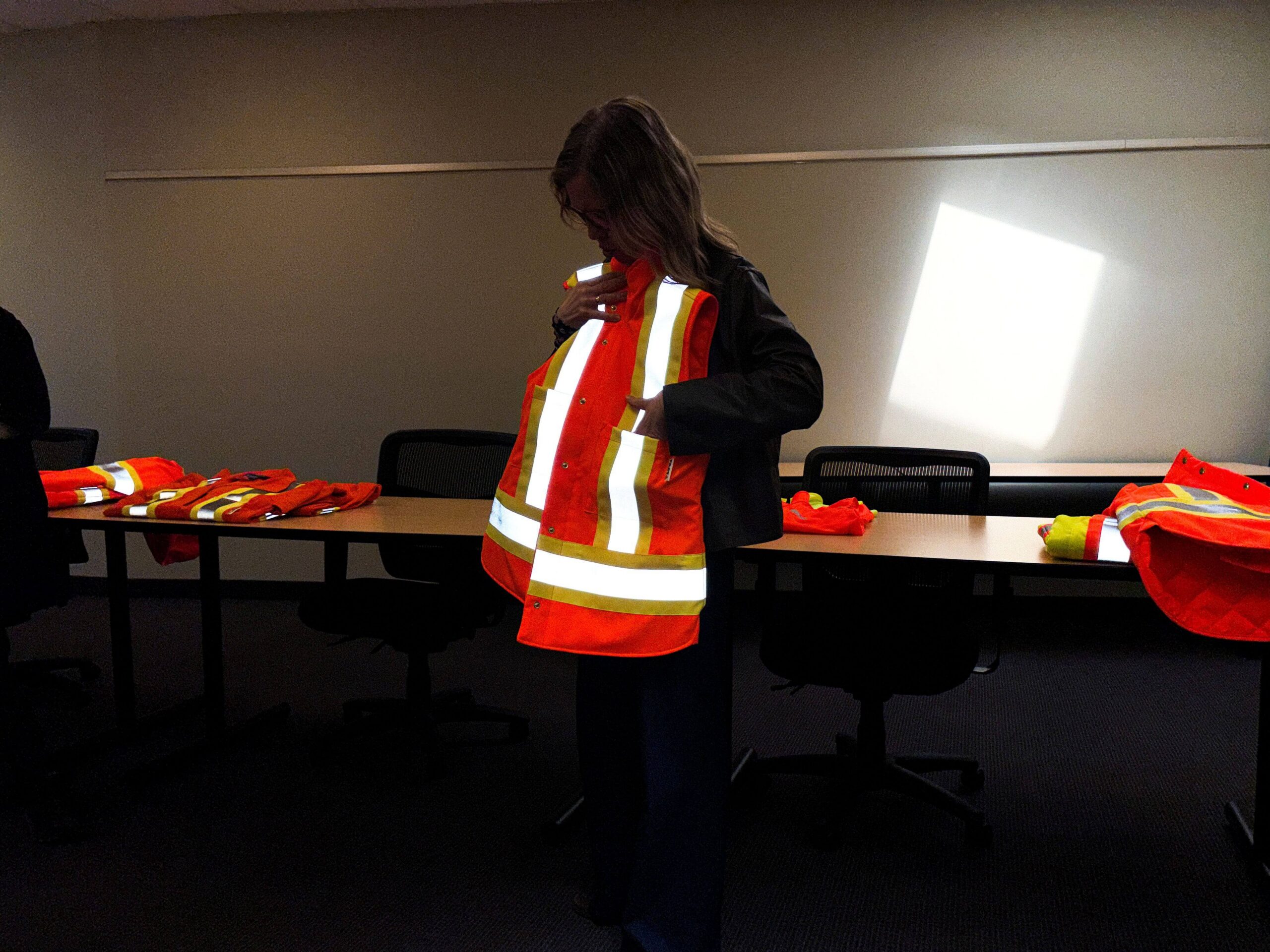
Marie showing us a vest
The team also details conversations they’ve had with women in the field about where they can keep their period products. Somewhere out of the rain and easy to access.
So F.A.S.T. made zippered inside pockets.
One woman, a flagger, asked if it was possible to make a pocket big enough for a paperback novel for during her breaks.
So F.A.S.T. made two pockets big enough for a paperback novel.
Dee Miller, President / Owner, had told us earlier that they have spent four years devoting time and resources to developing patterns that fit women in the industry.
This whole science of fit is used all the time in the fashion industry, but it’s never been transferred over to the safety industry. So we took that expertise, education, knowledge and have applied it to manufacturing women’s clothing in safety apparel that fits women.
Lindsay examines a different vest while she talks to us. “I found that the biggest gap is when you’re trying to fit over the chest for a woman, you were getting arm hole gaps and gaps in here,” she points to the neck, “which we found, safety-wise, it was getting caught on just about everything. So if we could tailor it to the woman’s body, we could actually have the proper fit but also promote safety.”
“These are not men’s garments scaled down to women’s by any means,” Marie emphasizes. “These are developed from women’s blocks [patterns].”
When a woman wears a smaller version of a man’s garment, she will have issues with her sleeve length, pant length, neck circumference, shoulders, crotch hanging too low, hips, waist, etc. Each garment at F.A.S.T. has been intentionally designed and created with women’s needs in mind.
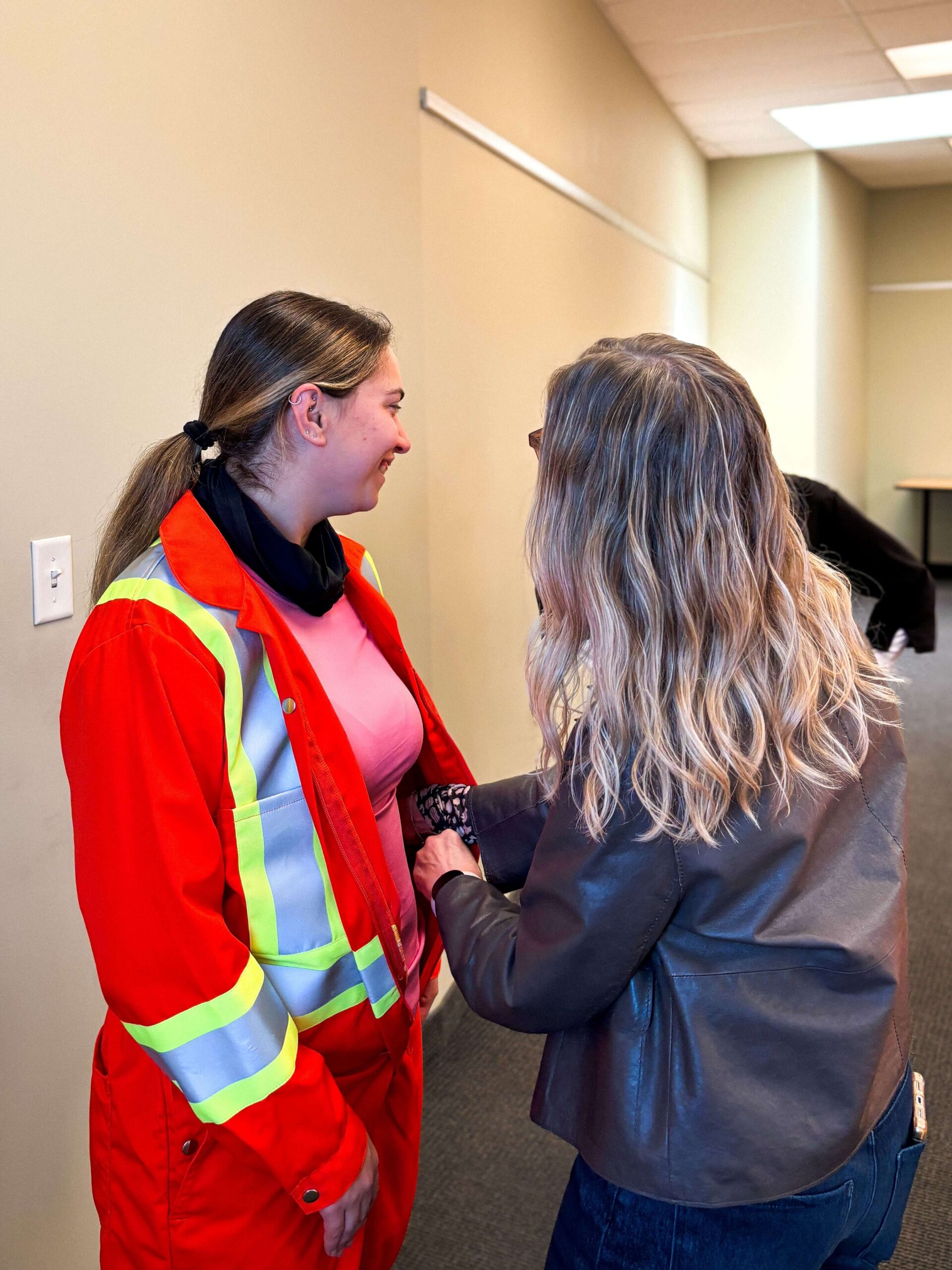
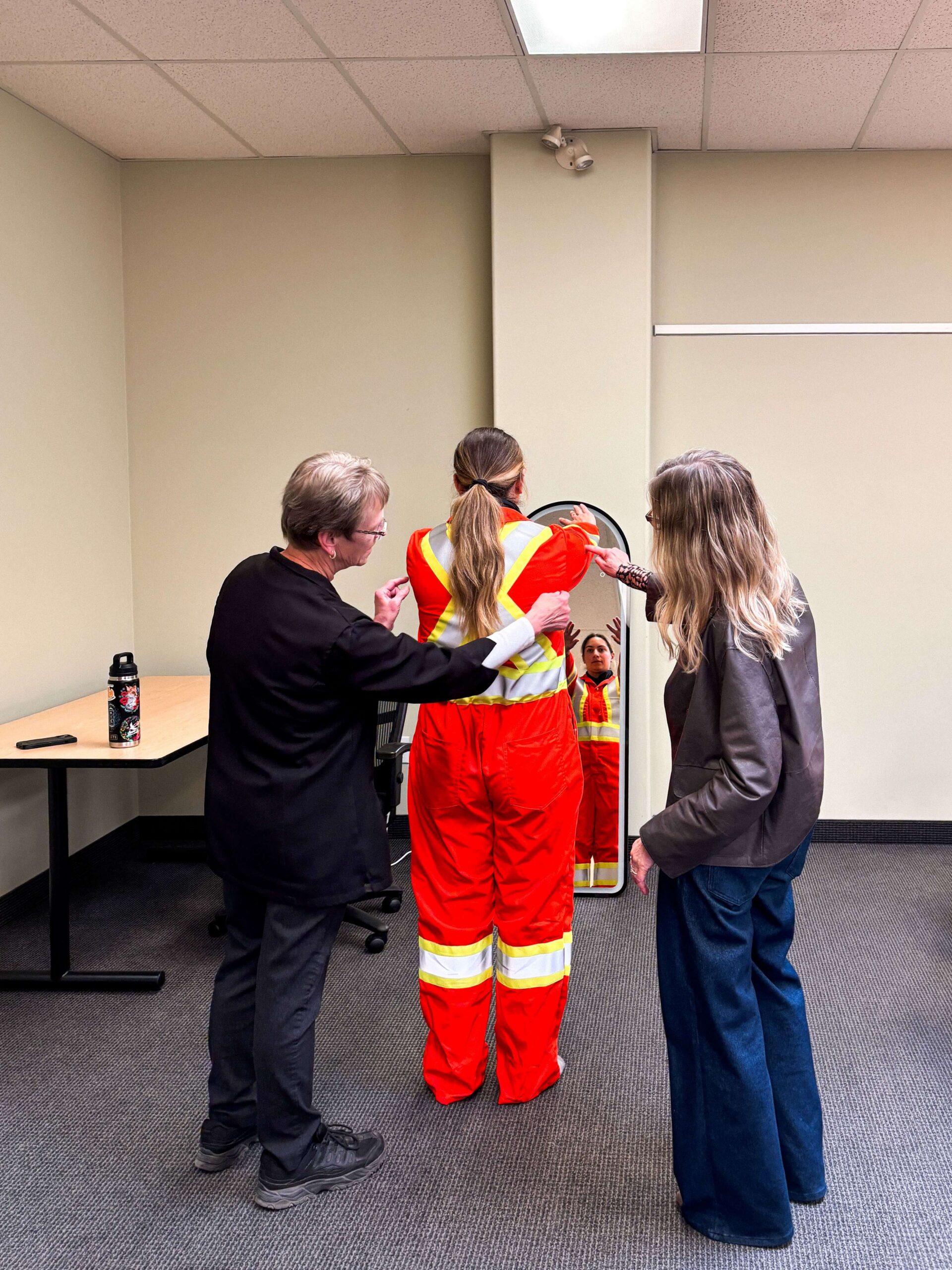
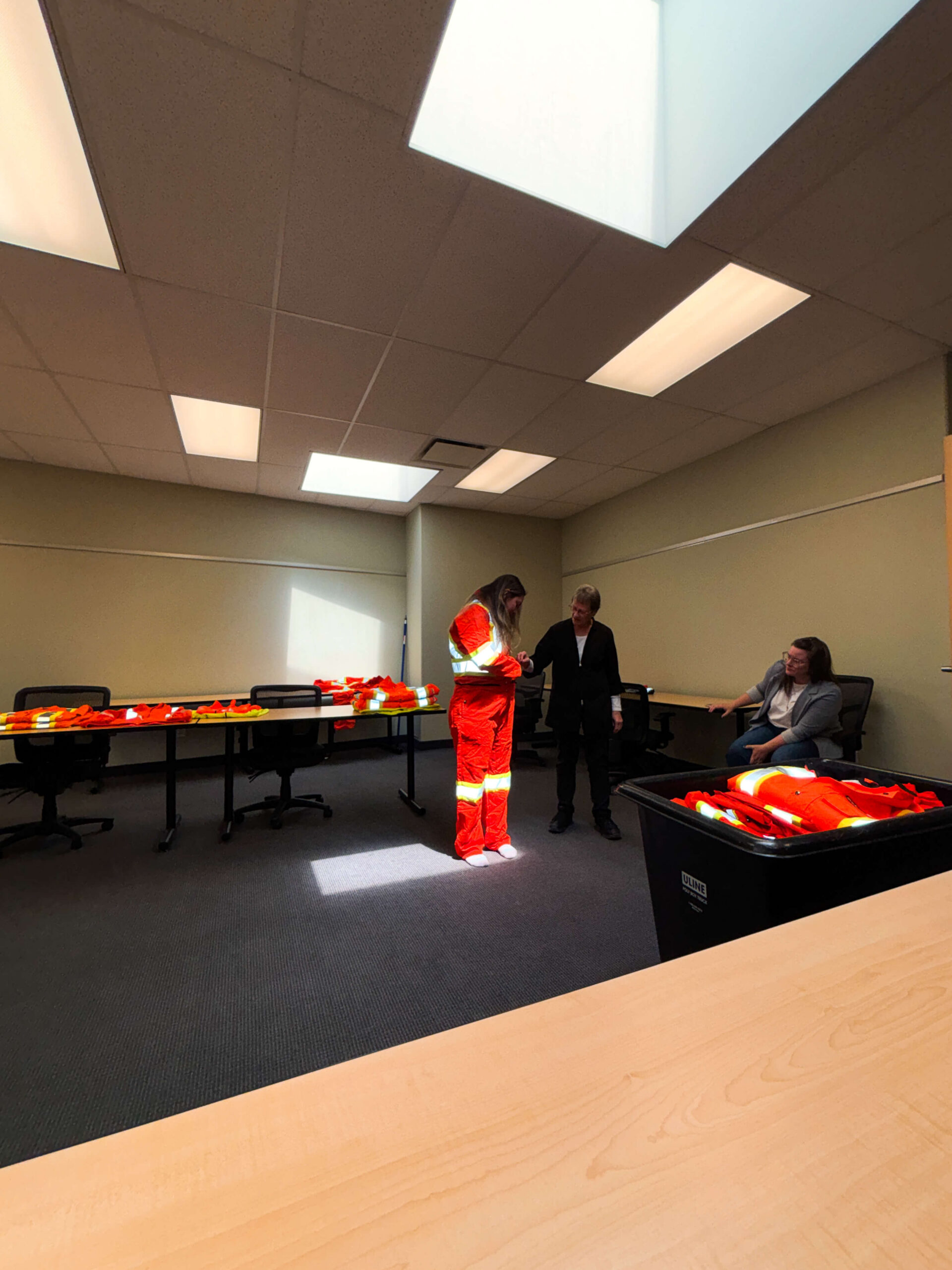
Marie adjusting Faith's coveralls
I worked for [a hiking apparel company] for seven years. When I started there, they had men’s sizing and unisex sizing. And kids and youth. No women’s. Their unisex sizing was one size down from men’s. They used a men’s small and called it the unisex medium. No other changes made to it.
You realize this doesn’t fit anybody, right? It doesn’t fit men, it doesn’t fit women… Are you assuming here that women don’t hike? That women don’t climb mountains? That’s 50% of the market share that you’re not even interested in. That you’re not fitting, that you’re not selling to. I was a pattern maker telling senior management they’re missing out. 50% of the population is not even looking at your product because you don’t size for them.
F.A.S.T. just wants women to be considered.
Some time ago, Dee had the idea to design a warm, reversible vest with quilted material that turns the reflective inside out for when you’re going to the pub after work. They went through a bunch of different style iterations as they were figuring out what the must-haves were. It had to have a collar that kept the wind out, it had to be reversible, it had to have pockets, and they opted to make it a snap-front closure.
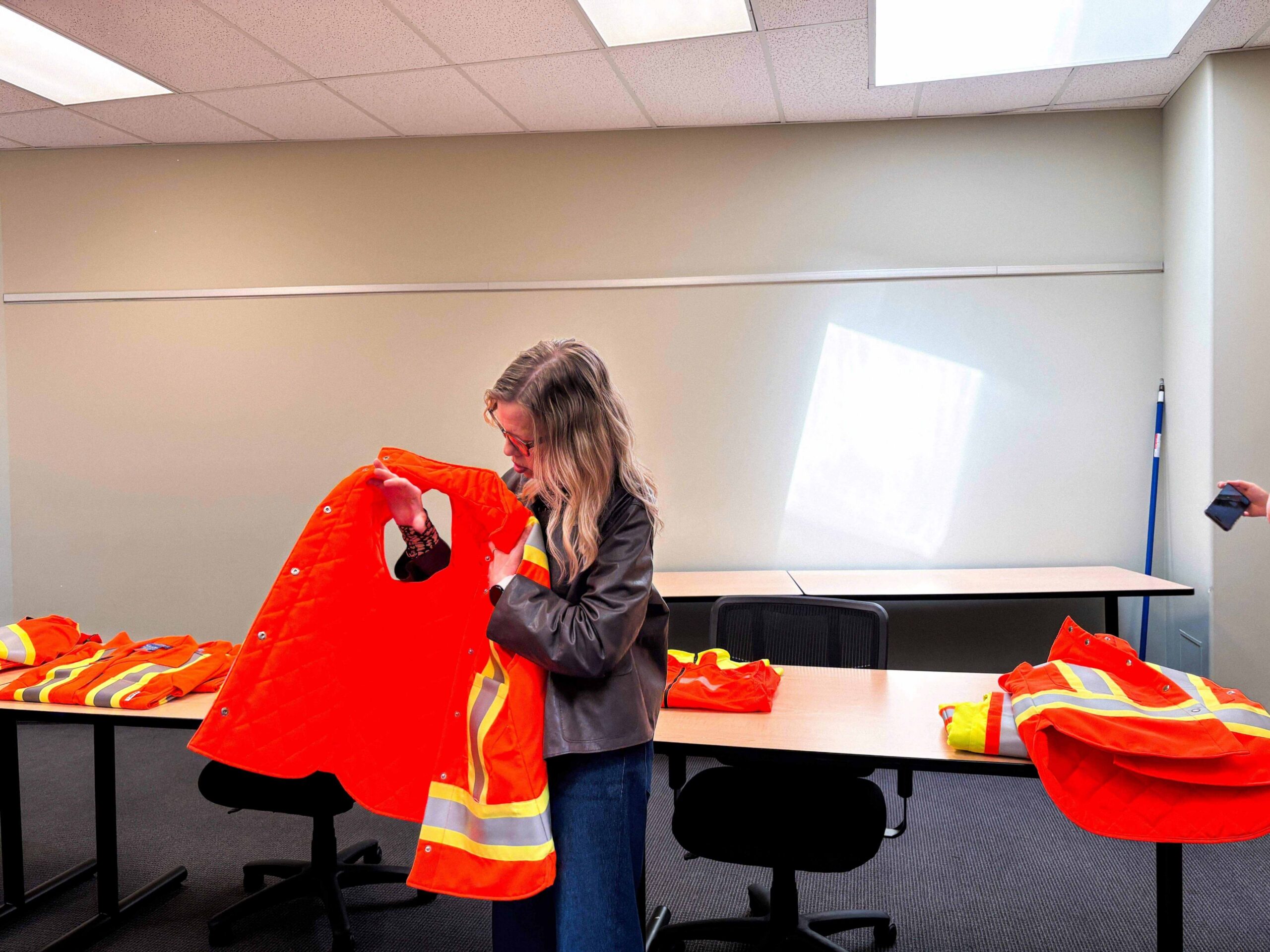
Marie showing us their quilted vest
It has a pocket incorporated into the princess seam (a vertical seam used in women’s-tailored clothing), two zip pockets, two patch pockets, and regular, CSA-approved high-vis reflective.
They quilted the material themselves.
“We’re just trying to think of all the everyday considerations of what you need your clothing to be while you’re wearing it at work,” Marie says.
They currently run sizes from XXS to XXXXL, in both regular and petite. They also say that if there’s a demand for it, a tall line is completely doable.
As Faith tries on different styles and sizes, she agrees with a lot of what the F.A.S.T. team is talking about. She recalls googling hacks for making her PPE fit properly and says that she’s lucky that her gear fits mostly correctly. Mostly being the key word.
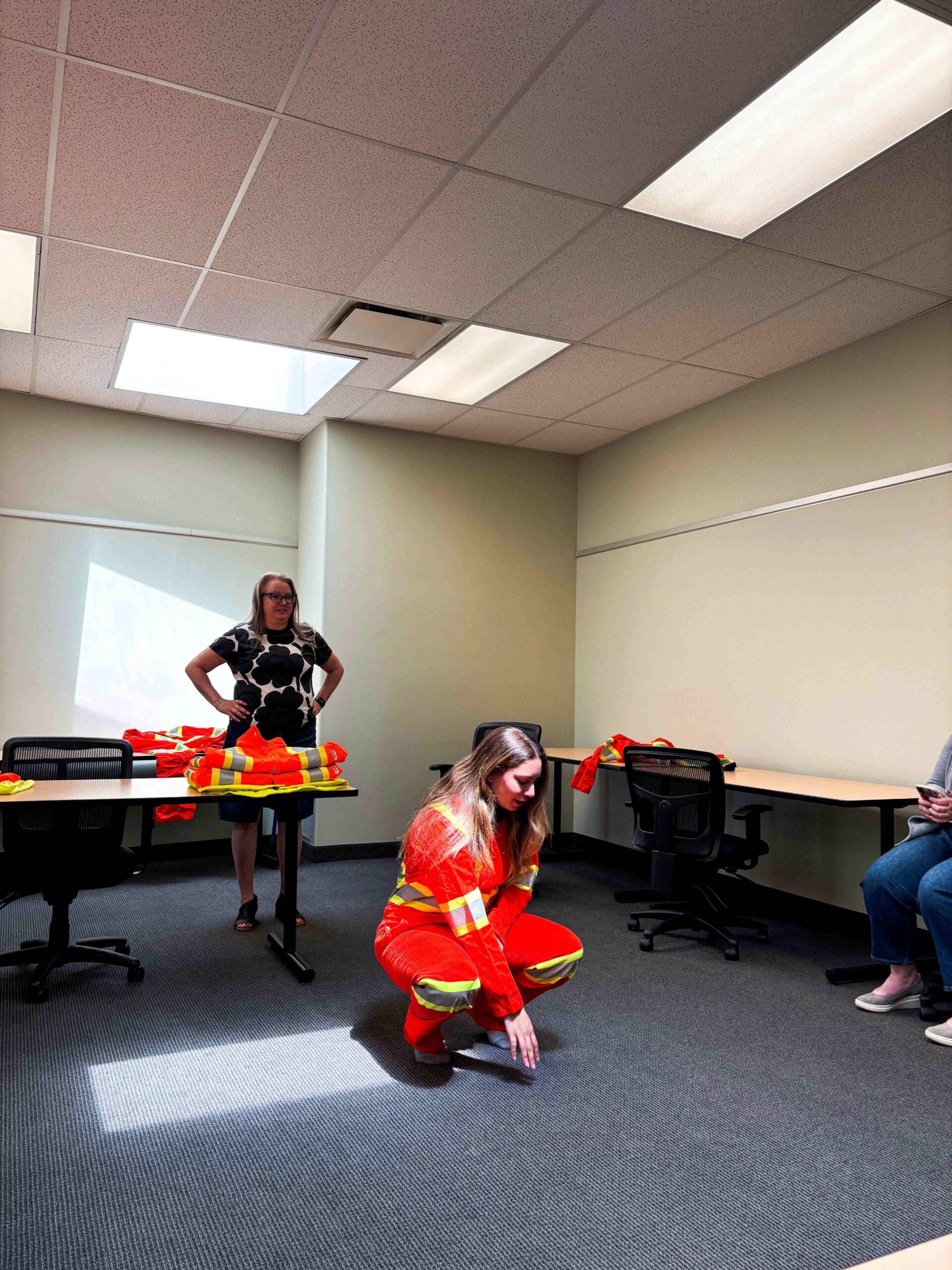
“When you’re wearing a pair of coveralls and you have to crouch down, we found that an automatic thing is that you have to pull your crotch up so that you can actually hinge properly to get down,” Marie says. “So to mitigate that constant movement, we put in an elastic on the inside back so that you can actually cinch up the back waist so that it’s always in the right spot and you don’t have to pinch your pants up when you’re crouching down.”
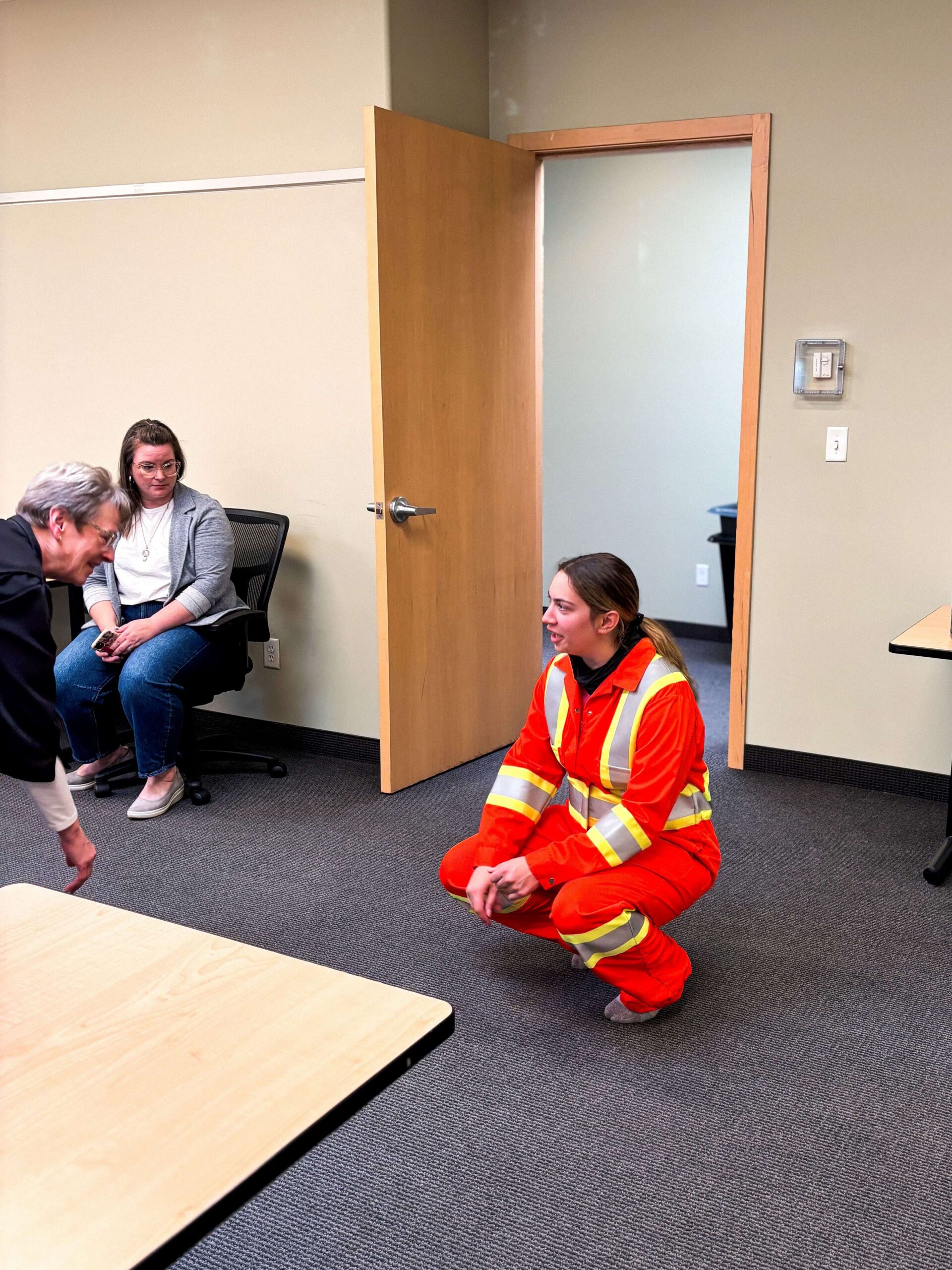
Faith crouching in her coveralls
The team is quick to bring Faith new options to try on, and the women are abuzz with their ideas and modifications. You can tell how deeply they care about their work. We are just the lucky witnesses.
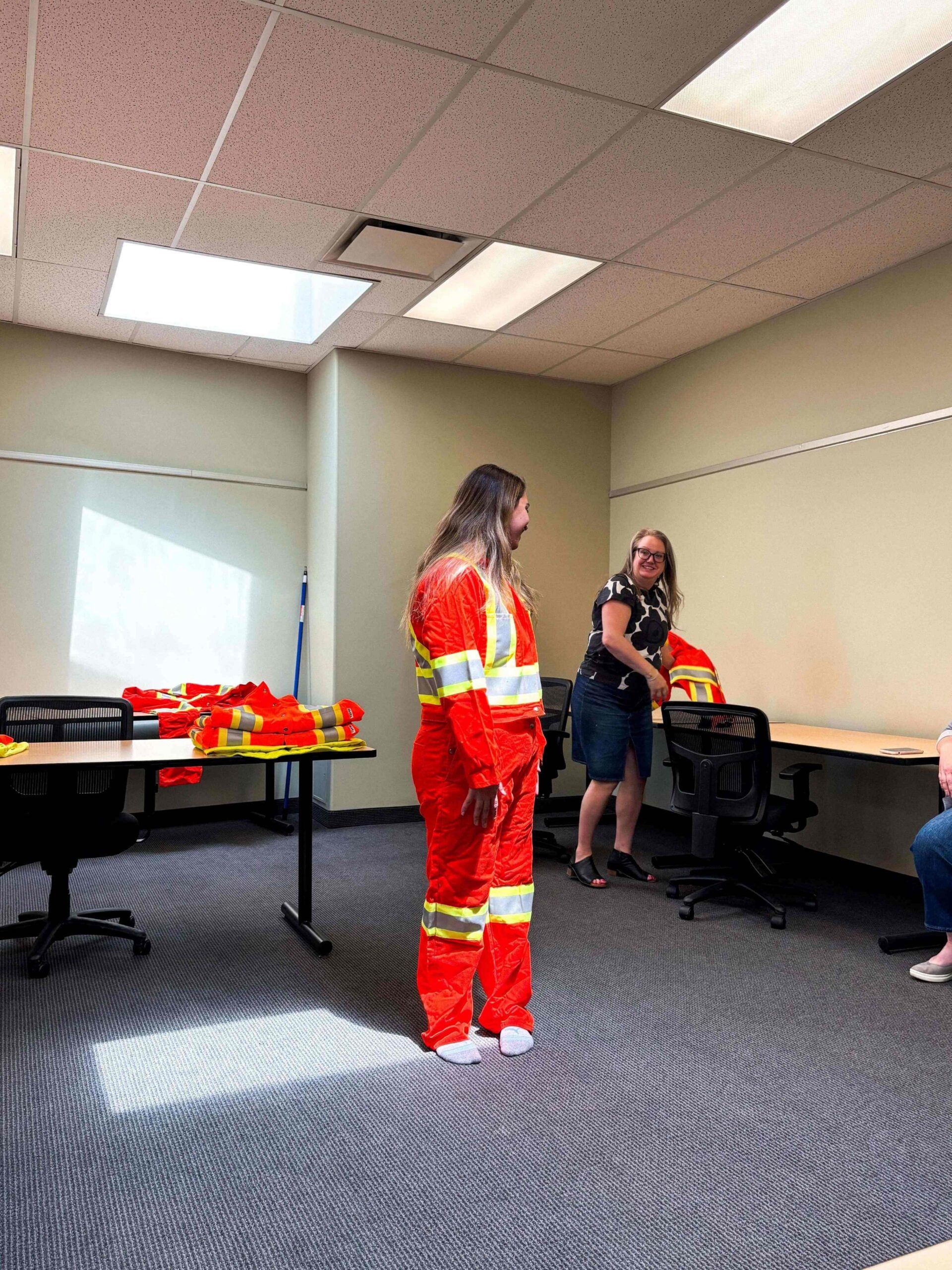
After much buttoning and zipping, the room is happy with the fit of Faith’s new set of PPE. Working in electrical and hoping to become an electrician, Faith and the team have gone with a flame-resistant coverall. They are able to customize the fit to her height by using the petite line. A Cobra Electric logo will be added to the breast before it’s delivered to her.
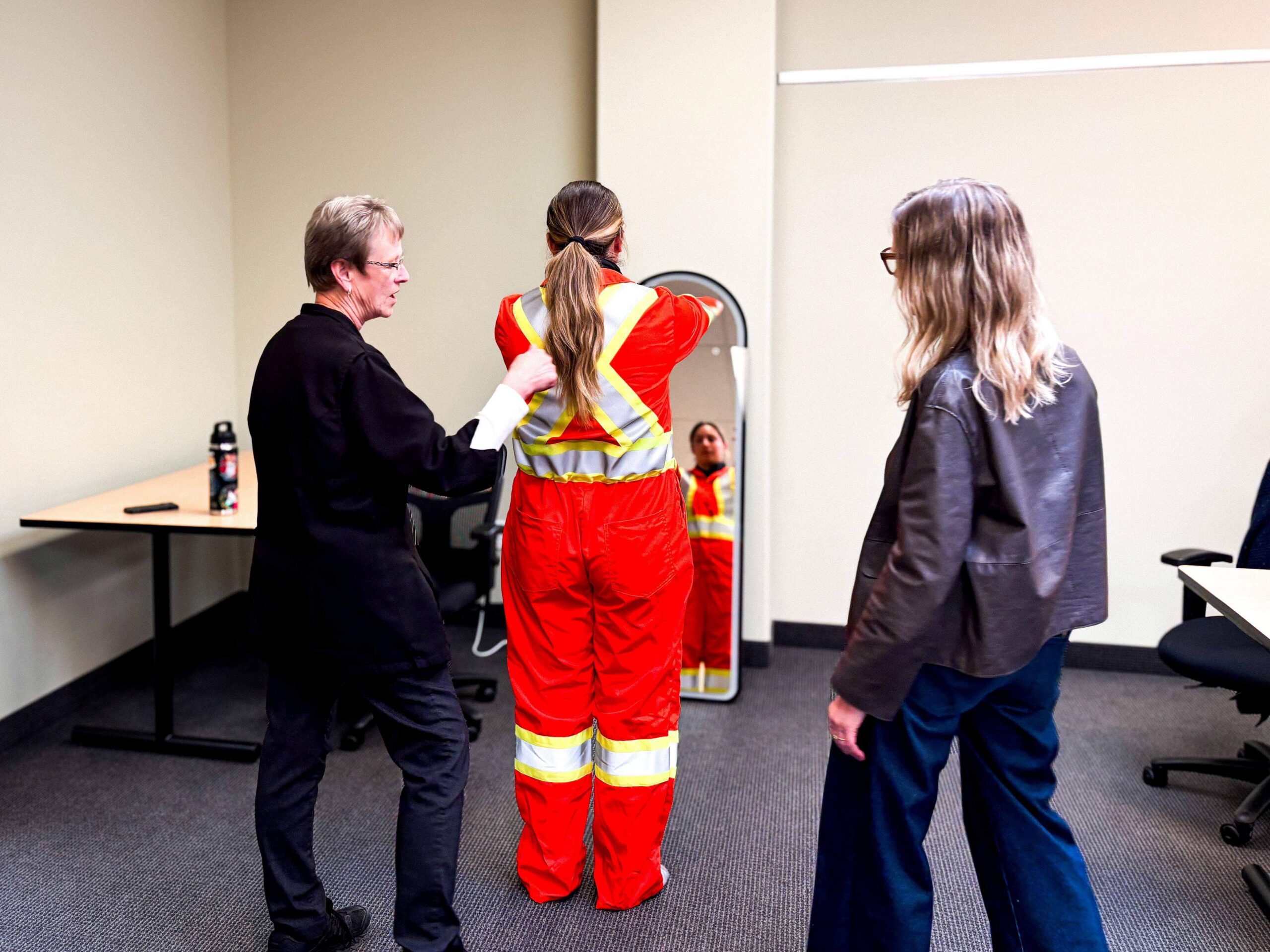
The final touches
For a moment, everyone stands back and admires the work before them. Faith glows. And it’s not just the high-vis.
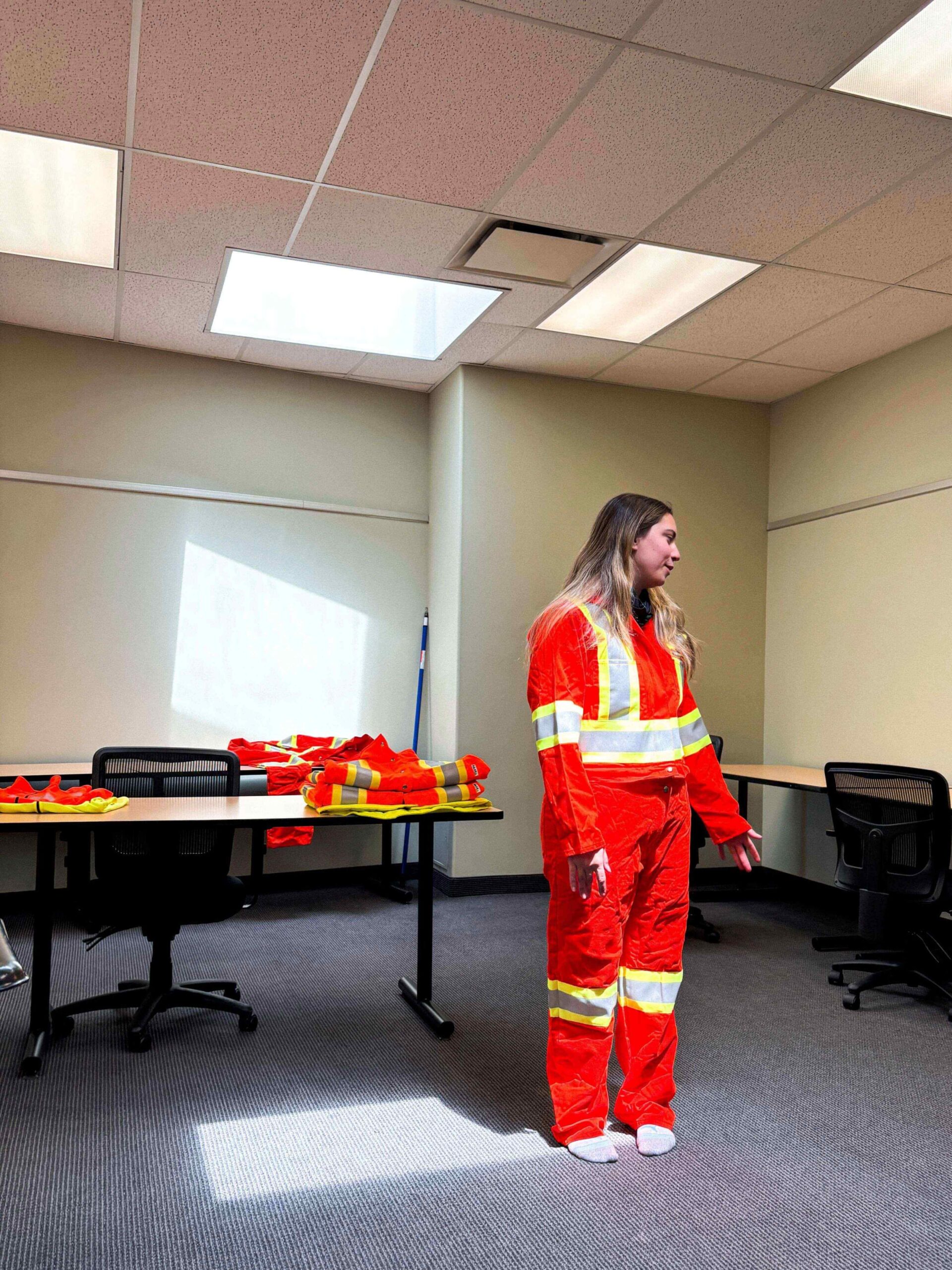
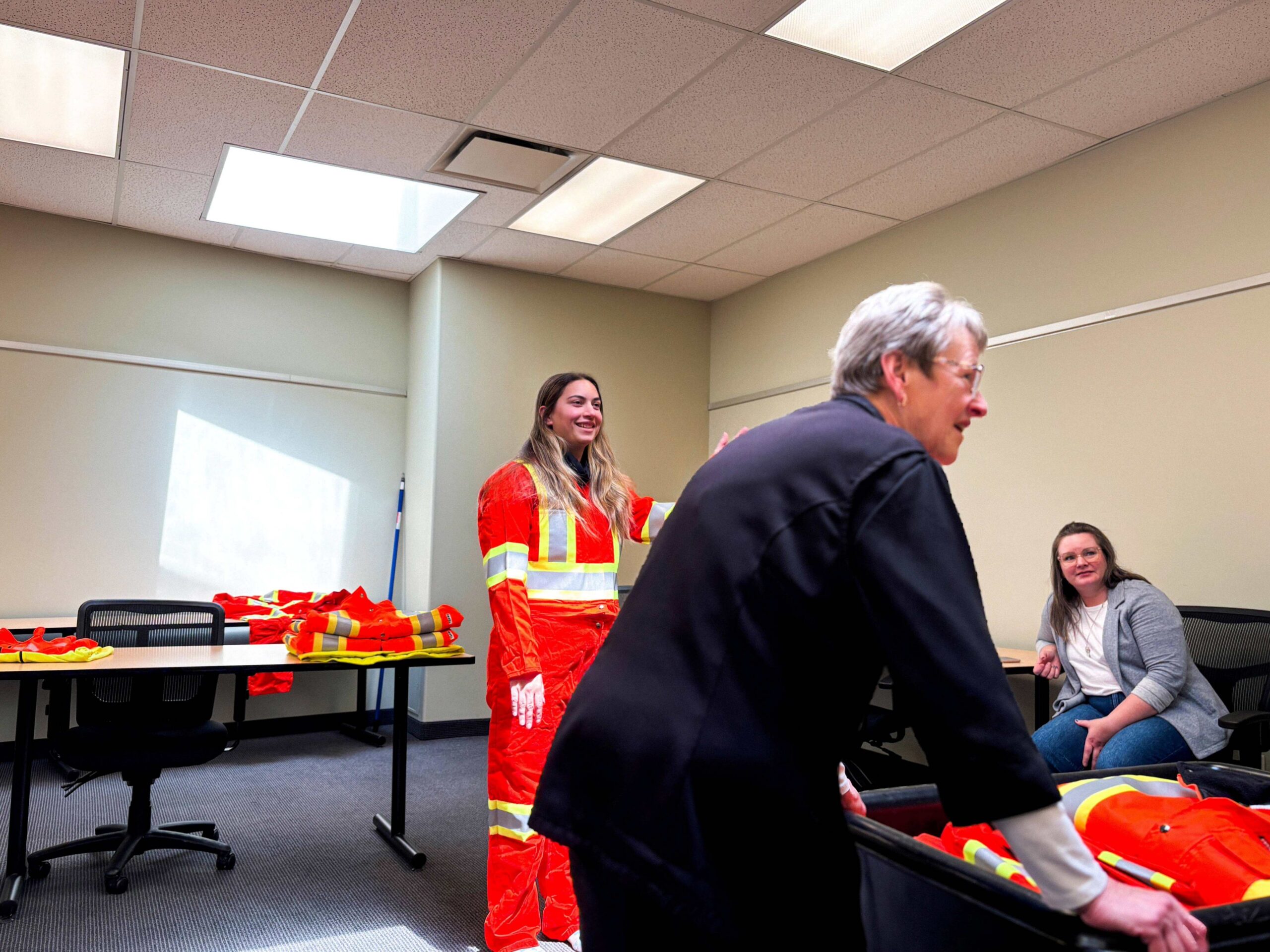
The team admires Faith in a mirror
Afterwards, when Faith is back in her regular clothes and we’re packing up to go, we ask her what she thinks about her new coveralls.
“It felt so comfortable,” she tells us. “Like I was putting on a regular outfit. It felt like it fit how it was supposed to fit.”
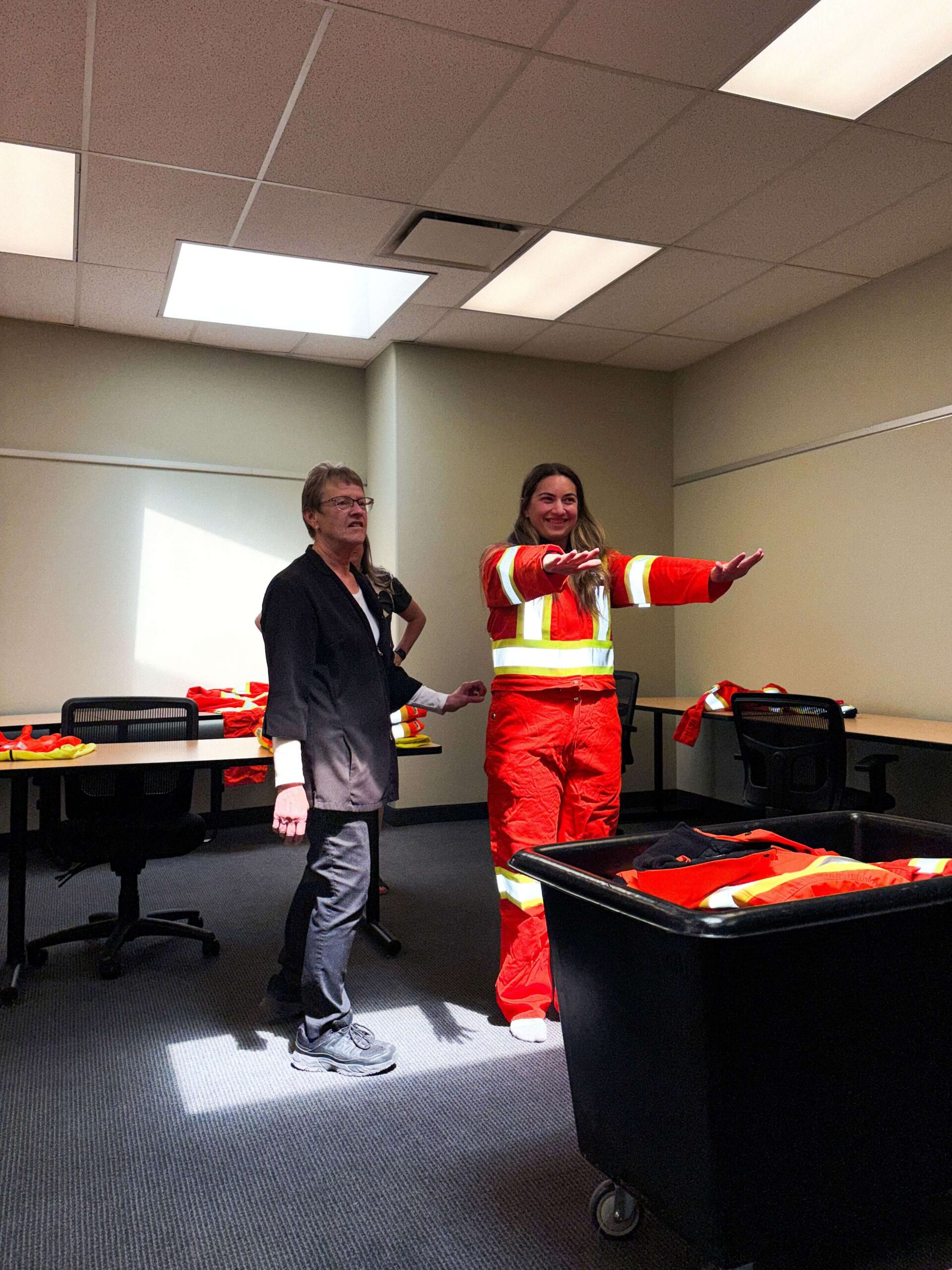
It fits!
Perhaps we, as companies and people in general, have failed to have conversations with the women who work for us beyond surface-level work requirements. Imagine how many near misses, incidents, or time losses we could avoid by more adequately protecting women in the workplace. If your daughter— your sister, your mother —went out onto a worksite, would you feel assured by her wearing what women wear now? Would you feel prepared and confident to do your own job in shoes that are too small for you or a shirt that was too tight around your neck? The bottom line is that you shouldn’t have to.
Can women in the field get by with using men’s clothes and some elbow grease? Sure. They always have. But when technology advances, when resources become accessible, and when someone speaks up about an issue, maybe it’s time to forge a different path.
“It’s really cool to see things are being designed for us,” Faith says. “I think that’s going to be huge for a lot of women who have been waiting for it for a really long time.”
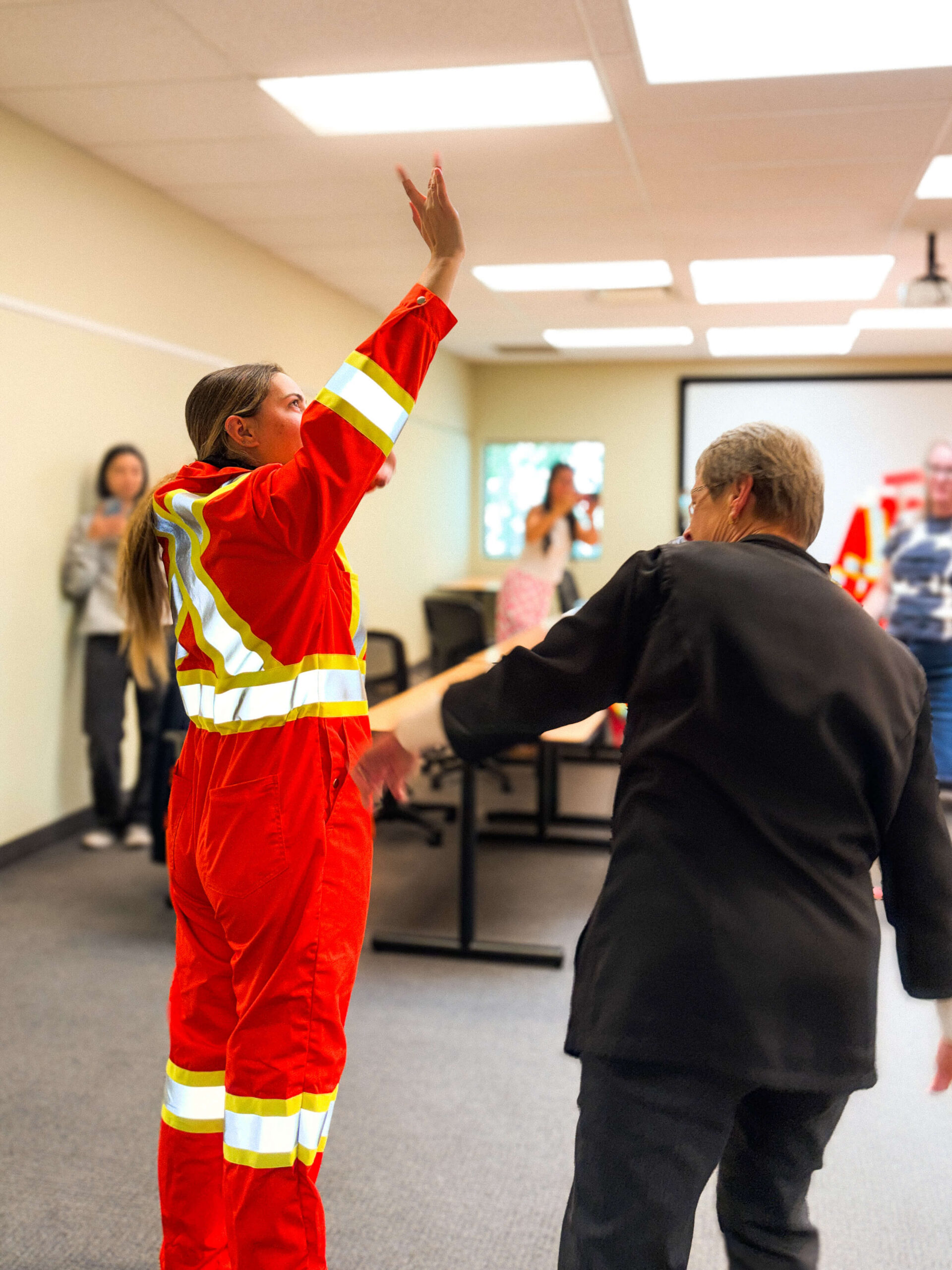
Faith reaches for the stars